
After Maduro: What's Next for Venezuela?

By: Jared Lenton
Published: February 11, 2026

On February 11, students, Venezuelan community members and foreign policy professionals gathered at Georgia Tech’s Exhibition Hall for a compelling discussion on Venezuela’s ongoing socioeconomic and political crisis.
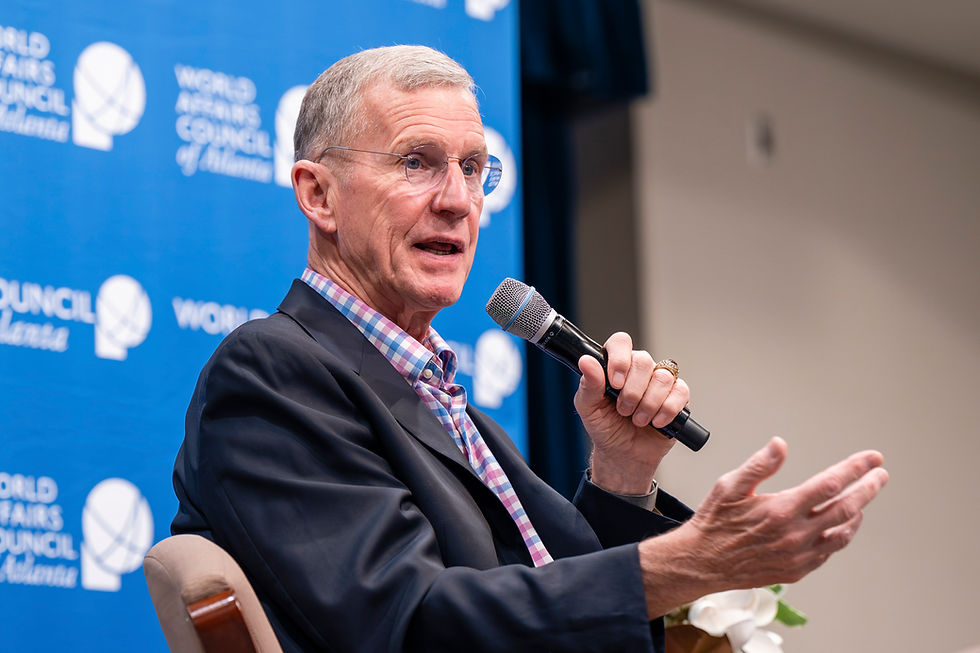
The event featured retired U.S. Ambassador to Venezuela, James Story as the keynote speaker, with retired Ambassador Charles Shapiro serving as the moderator, and World Affairs Council of Atlanta President, Rickey Bevington delivering welcoming remarks.
James Story — Keynote Speaker (Retired U.S. Ambassador to Venezuela)
Story described the current Venezuelan crisis as one of the largest migration crises in the Western Hemisphere, with the country lacking universal access to basic rights and forcing out more than 8 million citizens.
The Venezuelan crisis affects stability, democracy and diplomacy in the Western Hemisphere — hindering citizens’ ability to take out bank loans or secure employment. Story emphasized that the Venezuelan regime is unlikely to relinquish power any time soon.
“All the institutions are against you [Venezuelans],” said Story. “That must be fixed. It’s destabilizing to the region.”
In response to a question about President Donald Trump extracting resources from Venezuela, Story highlighted other struggling industries in the country, including pharmaceuticals and agriculture.
Story addressed Venezuela’s abundance of arable land and water, which he said could make it an “agricultural superpower.” The country’s agriculture sector thrived pre-crisis, but now it relies heavily on imports.
Further ramifications of Maduro’s potential removal for the post-war international order were also discussed. Story proposed reconstituting courts through clearly defined benchmarks and holding elections, which he predicted could happen within 18–24 months.
“Elections don’t make democracy, but they do set a standard,” said Story. “It all hinges on a free and fair election.”
Story said a worst-case transition scenario could result in an additional 3–4 million Venezuelans fleeing the country, on top of the roughly 9 million who have already emigrated. The Venezuelan crisis has drawn significant concern from the former ambassador.
“Of all of the things we were going to do, I had it last on my list,” said Story. “It was an extraordinary tactical success.”
Former Ambassador Story outlined his dynamic vision for Venezuela’s future throughout the conversation, concluding with the quote, “let’s have institutions that matter.”
Charles Shapiro — Moderator (Retired U.S. Ambassador to Venezuela)
Serving as moderator, Ambassador Charles Shapiro guided the conversation with a series of probing questions that encouraged deeper analysis of Venezuela’s future.
Shapiro also invited participation from attendees during the Q&A portion of the event, including a Venezuelan attorney who offered personal insight into the realities that citizens face within the country.
The exchange highlighted the human dimension of policy discussions and posed important questions about what conditions would need to exist for members of the diaspora to return home.
Throughout the discussion, Shapiro provided context and perspective drawn from his diplomatic experience, helping frame a complex and evolving geopolitical issue for a diverse audience.
Rickey Bevington — Welcoming Remarks (President, World Affairs Council of Atlanta)
World Affairs Council of Atlanta President, Rickey Bevington, commenced the event by introducing the keynote speaker, moderator and inviting attendees into a timely conversation on Venezuela’s future.
Bevington reiterated the Council’s mission to convene diverse voices, promote civil dialogue and encourage thoughtful engagement with global issues. The discussion reflected that mission by bringing together students, policy professionals and community members for an open exchange of ideas.
The World Affairs Council of Atlanta partnered with Georgia Tech and the Sam Nunn School of International Affairs to host the event, highlighting the importance of collaboration in fostering informed public discourse.
Watch the event recording. YouTube
View the event photo gallery here. Flickr
What’s Next?
Don’t miss the next event in this speaker series — International Women’s Day: Leadership Lessons from a Life in Soccer, featuring two-time FIFA Women’s World Cup Champion, Kelley O’Hara at Mercedes-Benz Stadium, sponsored by Bank of America. In this dynamic fireside chat, O’Hara will explore leadership, equity and the global impact of women’s sports.


Comments